
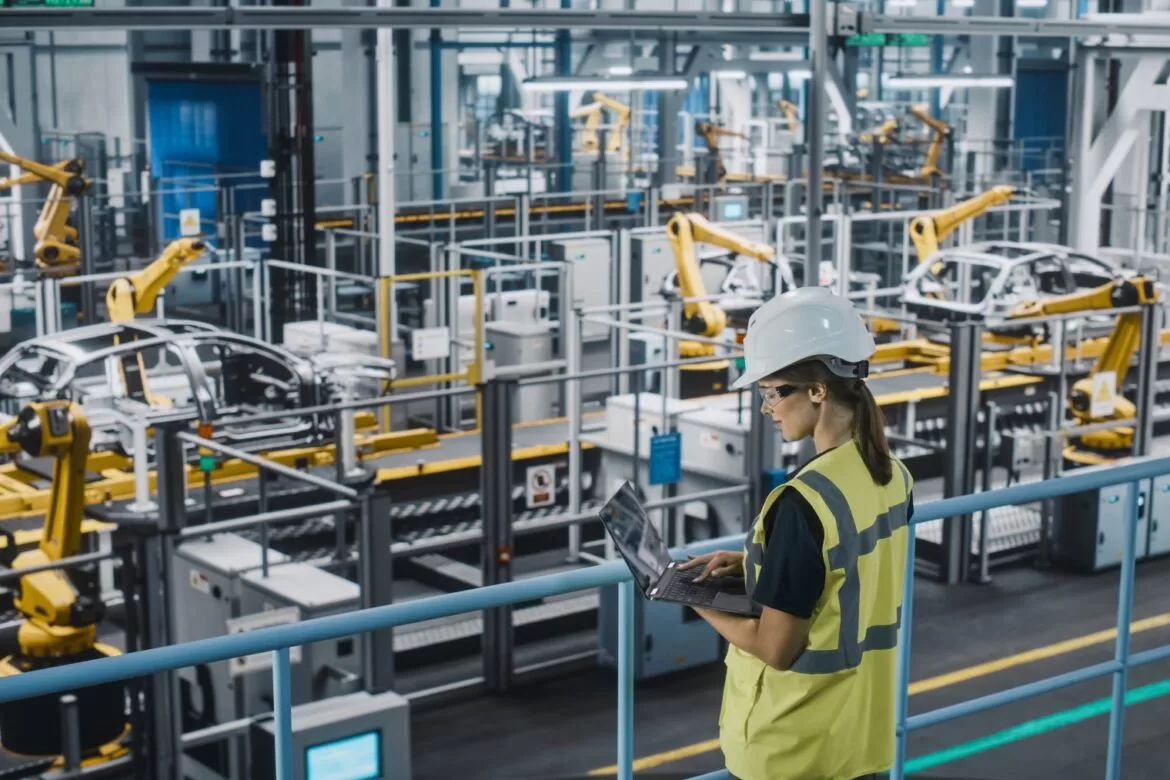
Here is a possible scenario to help you understand what MES software is. Imagine you are trying to manage a busy restaurant kitchen without being able to see what’s happening on each station. You cannot track which orders are ready, or know when ingredients are running low. Well, that’s what manufacturing used to be like before Manufacturing Execution Systems (MES) came along.
It’s important to understand that your manufacturing operation finds its central control system within MES software. This system stands as the bridge between business planning systems and factory floor equipment to monitor all manufacturing activities in real-time. The factory needs this system to function as a mission control center that gathers essential data for quick decision-making.
MES delivers real-time information about current manufacturing operations instead of presenting historical data from yesterday. The system uses machine and sensor connections to provide instant monitoring of all production activities across your entire operation. You get instant notifications whenever issues occur. The system reveals all aspects of production success so you can identify the reasons and gain valuable insights.
The Essential Functions That Keep Your Factory Running
Manufacturing operations depend on MES software to perform their daily operational tasks. The system monitors all work orders throughout their complete production process while maintaining correct sequence order for product advancement. The system identifies destination points for materials that arrive at the facility. The system automatically notifies specific personnel at appropriate times for quality inspection requirements.
Also, real-time monitoring stands as one of the most important capabilities that MES provides to users. Manufacturing equipment produces constant streams of data regarding temperature measurements together with pressure readings and speed metrics and many other variables. The system transforms all gathered data into useful business insights. When a machine heats up past safe limits MES sends alerts to operators before the situation becomes critical. Supervisors receive instant notifications about production delays which enables them to take immediate corrective actions.
The implementation of MES for quality management enhances effectiveness by monitoring quality metrics throughout production instead of only during final inspections. The system enables companies to detect issues at their initial stages when resolution costs remain minimal. The continuous quality monitoring function in pharmaceuticals and food production is vital because it meets essential regulatory requirements for these industries.
Why Manufacturers Can’t Afford to Ignore MES
The advantages of MES software extend much further than obtaining improved information. Production efficiency improves dramatically in MES companies because they identify and resolve previously unseen bottlenecks. You can solve production problems systematically after identifying their exact locations.
The implementation of MES reduces equipment downtime through its transition from reactive maintenance toward predictive maintenance. The system detects maintenance requirements before machine failures occur so it schedules maintenance during scheduled downtime periods. The practice reduces emergency maintenance expenses and decreases production loss costs which lead to significant savings for manufacturers.
The degree of quality improvements which companies experience exceeds their initial expectations. The real-time tracking of quality metrics along with production conditions reveals patterns that result in dependable consistent quality outcomes. The result leads to reduced defects together with decreased waste while satisfying customers.
All benefits from MES decision-making improvements represent the most valuable advantage that companies receive. Real-time accurate information allows managers to make swift decisions with confidence instead of relying on outdated reports for guessing. Companies gain competitive market advantages through their quick response capabilities because customer requirements shift frequently.
How Different Industries Use MES
Each industry requires a customized MES solution since they need different functionalities. The MES system monitors thousands of automotive components throughout elaborate assembly operations to verify vehicle quality standards and regulatory compliance. Every part can be tracked to its original source through this system because recall situations require this capability.
The pharmaceutical industry depends on MES to maintain strict FDA regulatory compliance. The system logs complete batch records alongside all ingredient usage details and production procedure documentation. The documentation standards serve as vital requirements for drug safety assessments and obtaining regulatory authorization.
The implementation of MES by food and beverage manufacturers supports both product safety measures and supply chain complexity management. The system monitors ingredient movements from suppliers until packaging completion which enables the necessary food safety traceability features during safety incidents.
The Future is Here with ProManage
MES software stands as the core element which drives modern manufacturing through digital transformation. MES functions as the operational platform which enables Industry 4.0 concepts such as predictive maintenance and digital twins and automated quality control to function effectively in real-world applications.
Manufacturers who use spreadsheets and paper-based tracking and gut instinct for production management can achieve significant performance improvement through MES implementation. The real question is not about MES implementation but how soon you can begin using it to experience its advantages.
The implementation process with the help of ProManageCloud has become simpler and more budget-friendly than ever before thus reducing the entry obstacles. The manufacturers who adopt these tools right now will establish themselves as leaders in the competitive market of tomorrow.
Contact us today to discuss MES implementation and how it can transform your business.