
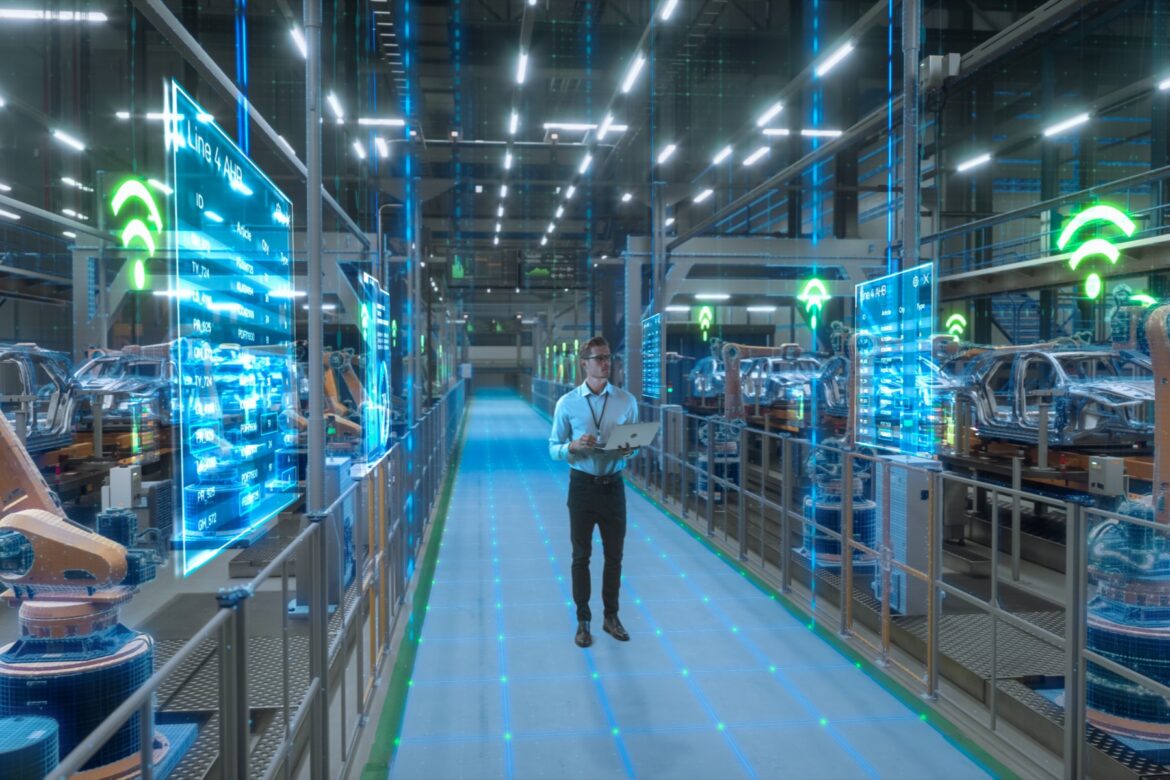
Artificial intelligence-powered MES systems are revolutionizing the prevention of production errors. By analyzing data collected from machines, these systems can predict potential failures and detect quality issues that arise in production processes with high accuracy. In today’s competitive manufacturing environment, we need proactive, not just reactive, solutions to prevent errors.
Artificial intelligence technology significantly expands the capabilities of MES systems, enabling real-time data analysis. This enables agile responses to market changes in the automotive, pharmaceutical, electronics, and food industries. In addition, thanks to artificial intelligence, we can analyze production demands and automatically create the most appropriate production plans, thus saving time and minimizing human error.
In our new blog post, we’ll discuss how MES systems are proven ways to prevent manufacturing defects. From predictive maintenance to real-time quality control, we will learn how this technology is creating smarter, agile, and adaptive manufacturing processes.
The Essential Role of Artificial Intelligence Powered MES Systems
Production systems have become one of the cornerstones of digital transformation with MES solutions. The integration of artificial intelligence technology transforms these systems into structures that not only monitor but also learn and make decisions.
Digitalization of production processes with MES
MES systems adopt the main purpose of instantly monitoring and recording the transformation of raw materials into final products. These systems enable the digitalization of production processes using data from machines, sensors, and operators. Thus, every stage of production activities becomes transparent and traceable.
Digitized production processes offer the following advantages:
- Paperless production environment
- Real-time data monitoring and reporting
- Increased process efficiency
- Reduction in operational costs
In addition, MES systems integrate with ERP systems, providing uninterrupted information flow between production operations and business processes. This integration supports the effective management of processes such as inventory management, production planning, and order tracking.
Real-time data analysis with artificial intelligence technology
Artificial intelligence analyzes big data from MES systems to make more accurate and faster decisions. Algorithms predict possible future scenarios by making comparisons with past production data. In this way, businesses can adopt a proactive approach, not just a reactive one.
Artificial intelligence-powered MES systems analyze real-time data, enabling agile responses to market changes in industries such as automotive, pharmaceuticals, electronics, consumer goods, and food and beverage. In addition, AI systems learn and improve over time, producing better results. These systems continuously improve processes by analyzing the data obtained in each production cycle.
Using machine learning in root cause analysis of manufacturing defects
Machine learning is a powerful tool for identifying the root causes of errors in manufacturing processes. This technology enables quality control by detecting anomalies in production processes with data science algorithms. Abnormal behaviors or data points can be identified by machine learning algorithms, and potential problems requiring rapid intervention can be identified.
First of all, artificial intelligence-driven MES systems use predictive analytics to anticipate potential problems or disruptions in the production process. By analyzing historical and real-time data, the system can predict maintenance requirements, reduce unplanned downtime, and improve overall equipment efficiency.
The use of machine learning in root cause analysis to prevent manufacturing defects provides businesses with both quality improvement and cost savings. This approach is also in full harmony with the proactive maintenance approach of Industry 4.0.
4 Proven Methods to Prevent Production Defects
Four proven methods stand out for preventing errors in modern production facilities. These methods of artificial intelligence-powered MES are the basis for the increase in efficiency provided by their systems.
- Reducing unplanned downtime with predictive maintenance
Artificial intelligence algorithms analyze vibration, temperature, and pressure data from sensors to predict when equipment may fail. Thus, maintenance activities are planned, and production downtime is taken under control. With a predictive maintenance system, an automotive manufacturer was able to reduce maintenance costs by 34% and unplanned downtime by 52%. Research shows that predictive maintenance practices lead to a 25-30% reduction in maintenance activities and a 35-45% reduction in breakdowns.
Predictive maintenance systems proactively detect potential failures, minimizing the need for emergency repairs and extending equipment life. In addition, as machine efficiency increases, energy consumption and labor costs are reduced.
- Real-time quality control algorithms
AI-powered image processing systems automate quality control processes by scanning products on the production line in real time. These systems can detect surface defects, color differences, and cracks within seconds. In one textile company, the rate of defective products decreased by 67% after the introduction of an AI-powered image analysis system.
This technology minimizes human error caused by manual quality control processes and raises quality standards. Real-time checks on the production line quickly and accurately identify defective products, reducing waste and lowering production costs.
- Preventing incorrect work sequences with automated production planning
AI-powered MES systems create an optimal production plan based on demand forecasts. System:
- Analyzes stock levels
- Considers lead times
- Optimizes production scheduling
As a result, unnecessary production is avoided, raw material wastage is reduced, and order fulfillment time is shortened. Automated planning increases production efficiency by minimizing human errors.
4. Early detection of deviation-related errors through anomaly detection
Anomaly detection is the art of capturing “unusual” situations. This technology recognizes and flags when a product behaves differently from the norm on the production line. The interesting thing is that these systems are not trained to recognize faulty samples, only defect-free products. The system learns what is “correct” and if any image deviates from this norm, it recognizes it as a potential error.
Thus, AI-supported MES systems play an important role in preventing errors in production processes and provide a competitive advantage to businesses.
Challenges in Artificial Intelligence Supported MES Implementation
Successful implementations of AI-powered MES systems face many challenges. Businesses have to overcome some obstacles while taking advantage of the opportunities brought by these systems.
Data quality and sensor integration issues
Data quality underpins the effective operation of AI-enabled MES systems. However, the inability to retrieve data from older machines is a common problem. Non-modern machines may have insufficient sensor support, which can prevent healthy data flow. In addition, data from different sources needs to be standardized, otherwise, data inconsistency may occur.
To address concerns about data quality and availability, manufacturers should invest in data collection and storage infrastructure. Data cleansing techniques and leveraging IoT sensors to capture real-time data can improve data quality and provide more accurate insights.
Initial investment costs and ROI calculation
MES implementation can require high initial costs, including hardware, software and training. To overcome the initial investment challenge, manufacturers can adopt a phased implementation approach. Starting with smaller pilot projects can demonstrate the value of AI-powered MES and gain management buy-in.
ROI is calculated with the following formula: ROI = (Net Profit / Investment Amount) x 100. However, difficulties in determining the return on investment can lead to the assumption that business risks outweigh the potential value.
Workforce adaptation and training requirements
Employees can often resist change. Supporting staff in the transition from traditional methods to digital is necessary to ensure cultural adaptation. Manufacturers can overcome workforce training and acceptance challenges by conducting comprehensive training programs to familiarize employees with the features and benefits of the system.
Involving employees and emphasizing how AI-enabled MES can enhance their roles can alleviate concerns and foster a positive corporate culture.
System integration and interoperability
Integration of new AI-powered MES solutions with existing systems can be complex. Not all MES and ERP systems are compatible; integration can be problematic if they are based on different technologies or use different data formats.
Collaborating with experienced system integrators or AI experts can facilitate seamless integration of the MES solution into existing production systems. Ensuring compatibility and interoperability between AI-powered MES and existing systems is critical to minimize disruptions during deployment.
Things to Consider When Choosing an MES Provider
Choosing the right MES provider is critical to the success of AI-enabled manufacturing systems. Businesses should pay attention to some key criteria when choosing a long-term technology partner.
Scope of AI capabilities
The MES provider’s AI capabilities directly impact the system’s success in preventing production errors. It is important to evaluate the provider’s AI capabilities, including machine learning, predictive analytics, and real-time monitoring. Powerful AI capabilities empower your production planning with data-driven insights and predictive decision-making.
AI-powered MES solutions like ProManage accelerate your decision-making process by offering artificial intelligence in all its capabilities. By identifying the root causes of machine failures, these systems reduce production downtime and increase operational efficiency. They can also analyze comparative data to detect and predict future problems before they occur.
Sectoral experience and reference projects
It is critical to choose providers with a proven track record of delivering AI-powered MES solutions. Be sure to evaluate their experience and success stories in your industry to ensure they understand your unique manufacturing challenges.
User-friendly interface and support services
A user-friendly interface plays a critical role in system adoption. A user-friendly interface can be defined as a design that users can easily understand and use when interacting with a digital product. A complex system can cause employee resistance and lead to implementation difficulties.
Comprehensive training programs ensure smooth implementation and user adoption, while reliable support guarantees quick assistance when needed.
Choosing the right MES provider is a strategic decision for manufacturers looking to harness the full potential of AI-enabled manufacturing systems.
The Future of Artificial Intelligence Powered MES Systems
AI-powered MES systems are revolutionizing the prevention of production errors. As we discuss in this article, these systems make manufacturing processes smarter, more efficient, and error-free thanks to data analytics and machine learning.
Proven methods such as predictive maintenance, real-time quality control, automated production planning, and anomaly detection offer effective solutions to prevent production errors. Thus, businesses gain a competitive advantage by reducing unplanned downtime and improving product quality. However, challenges such as data quality issues, high initial investment costs, workforce adaptation, and system integration must also be considered.
Choosing the right MES provider is critical for a successful implementation. In particular, factors such as the scope of AI capabilities, industry experience, and user-friendly interface determine long-term success. In fact, the success of MES systems depends on people being ready for this transformation as much as technology.
Artificial intelligence-supported MES systems will continue to revolutionize production processes. Manufacturers who adopt these technologies will reduce costs by minimizing errors, increase production efficiency, and quickly adapt to changing market conditions. In the future, deeper integration of AI and MES will offer new opportunities and solutions in the manufacturing world. Undoubtedly, in the digital transformation journey, AI-supported MES systems will continue to be an indispensable part of modern manufacturing.